Your report has 56 numbers. Here's what they say.
FamFirst reads lab reports from any Indian lab, as a PDF, scan or phone photo, and shows every result against its range, with the exact line it came from.
- 3 free reports a day
- Your file is deleted after reading
- No tracking
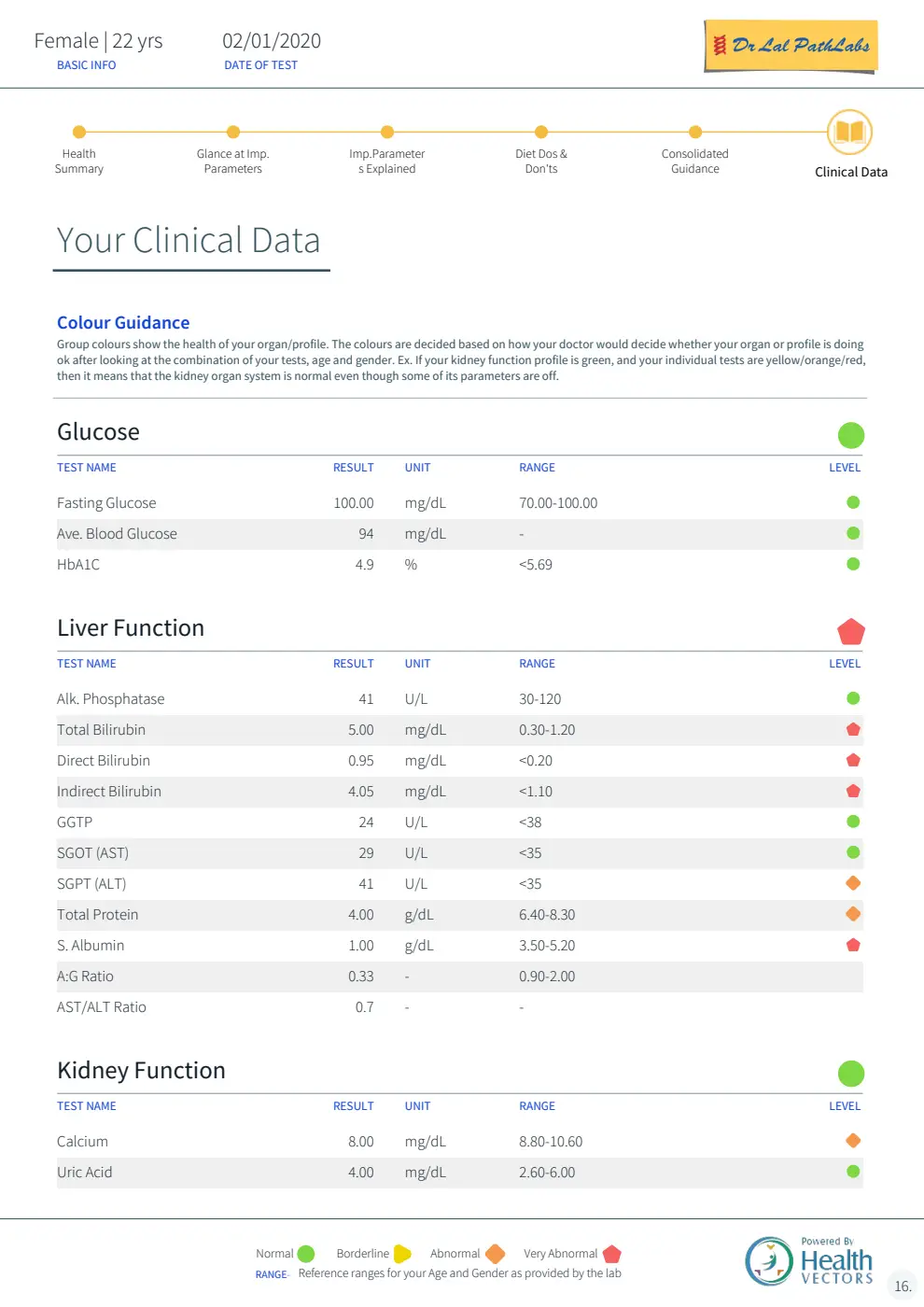
A lab report is written for the lab, not for you
Fifty or sixty lines of short names, units and ranges. Some values in bold, some marked with a letter or a colour. Ranges that don't match the report you got last year from a different lab.
And even a perfectly healthy person can see a value flagged: reference ranges are set so that about 1 in 20 healthy people fall outside them on any single test.
- Coloured dots instead of H or L. Every lab marks results its own way, and the colours aren't explained on this page.
- SGOT and SGPT are older names for AST and ALT, two liver enzymes. Other labs print the new names.
- “<35” is a single limit, not a band. Is 41 a little high or a lot? The report doesn't say.
How it works
Three steps, from the PDF in your inbox to a report you can actually read.
- famfirst
Step 1
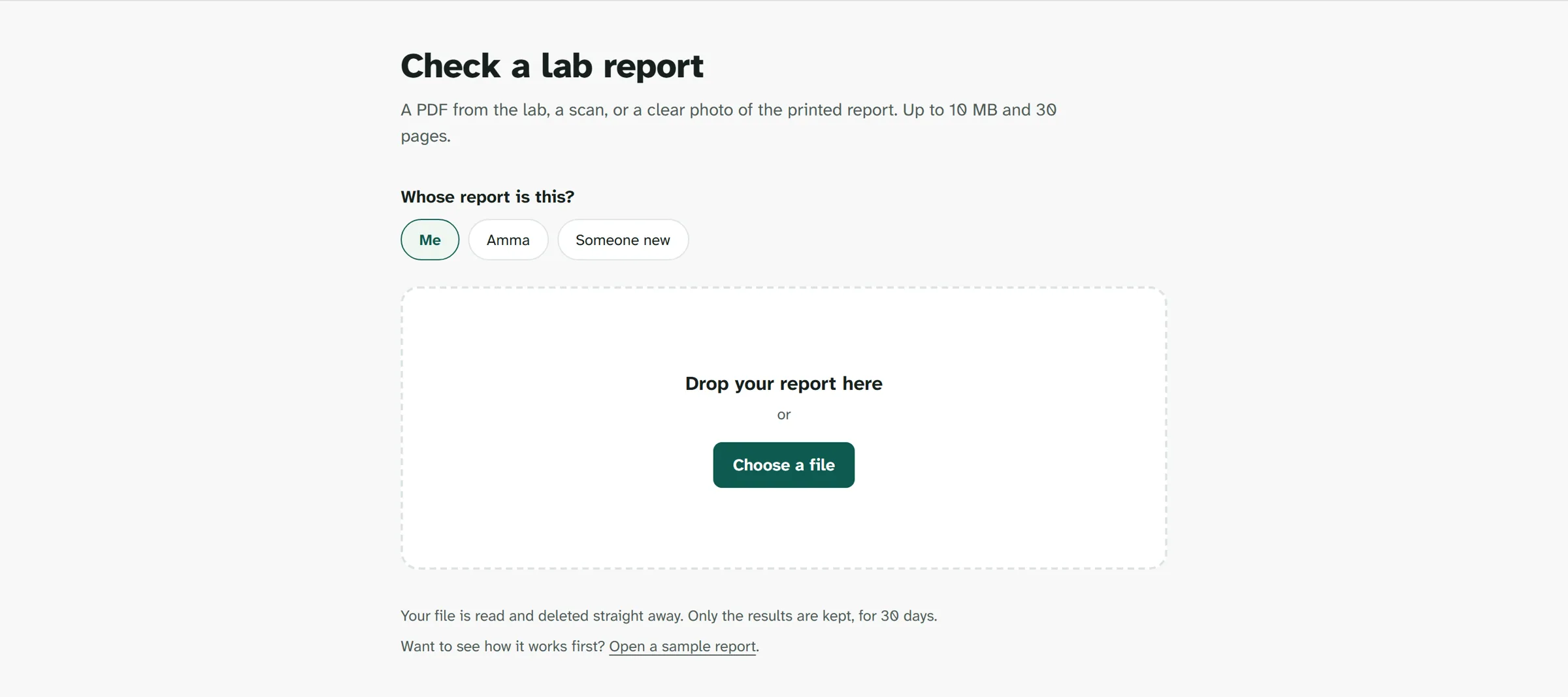
Upload the report you were sent
The PDF from the lab, a scan, or a photo of the printed pages. Say whose report it is: yours, or a family member's.
- famfirst
Step 2
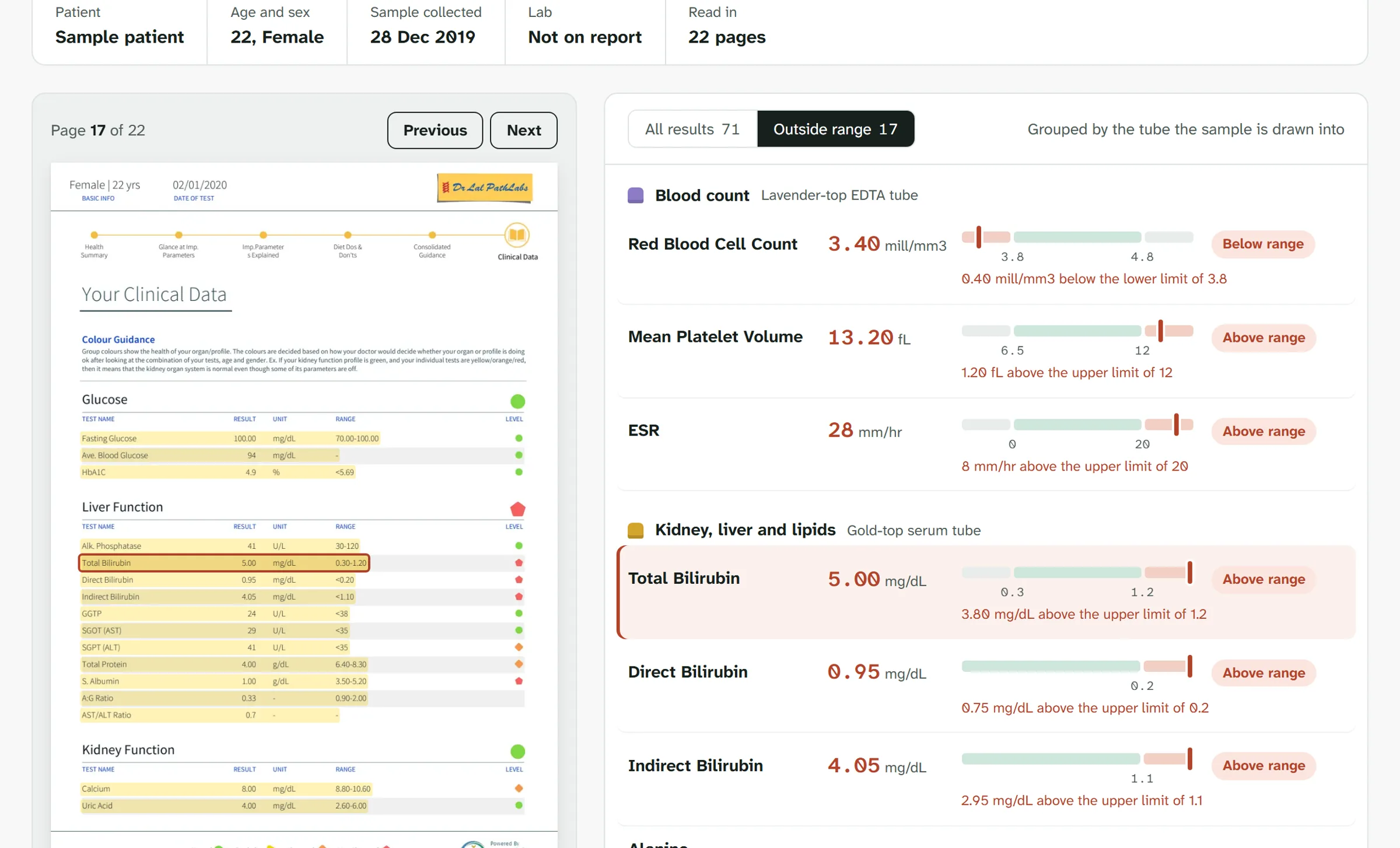
Every line is read, in about a second
Each result is copied from the report: the test, your value, the unit and the lab's range. Nothing is guessed or generated.
Step 3
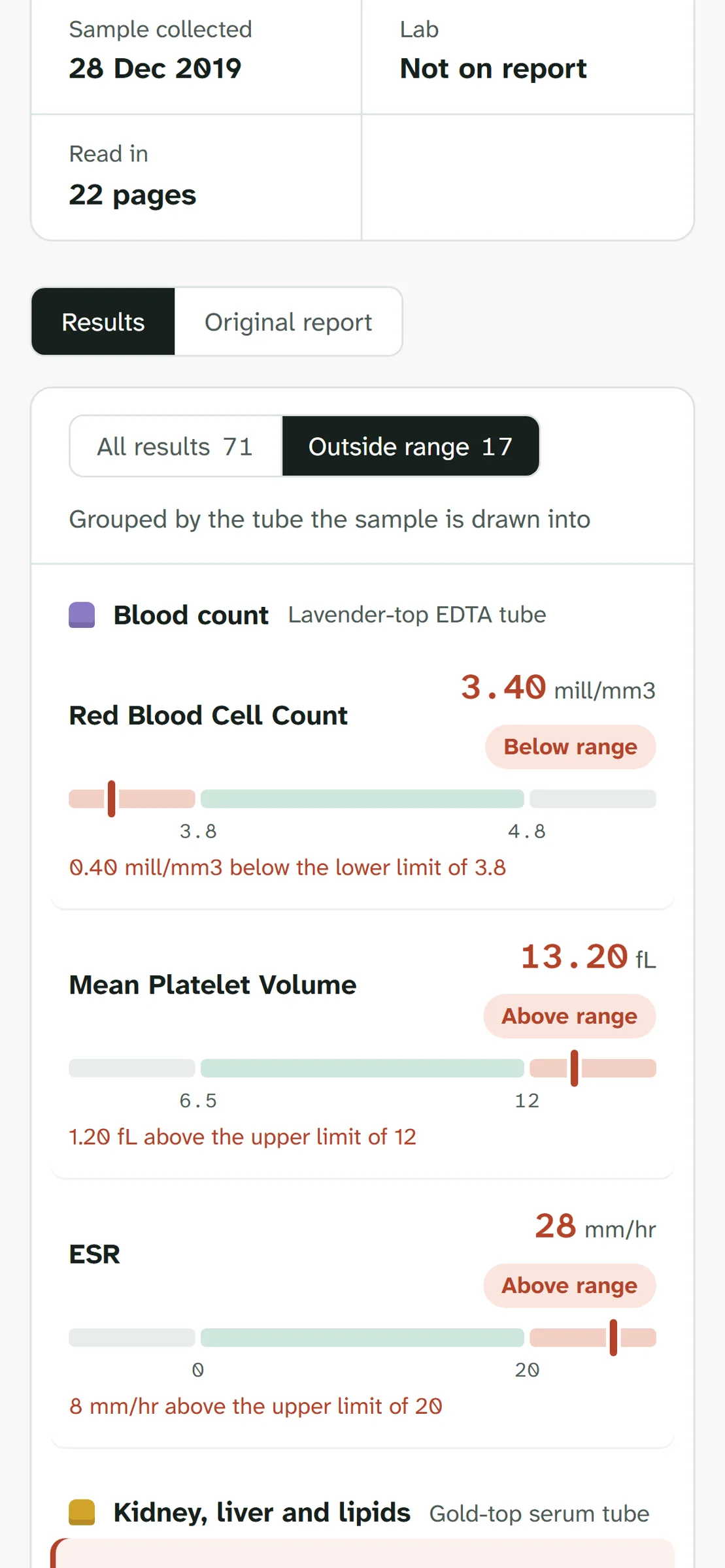
Each value, traced to its line
Tap any result to see the exact line on the original page, outlined. On a phone it's one tap away.
See it on three real reports
A 22-page health checkup, a phone photo of a printed report, and a 7-page PDF from Dr Lal PathLabs. Pick one to watch the lines being read.
Open the full health checkup sample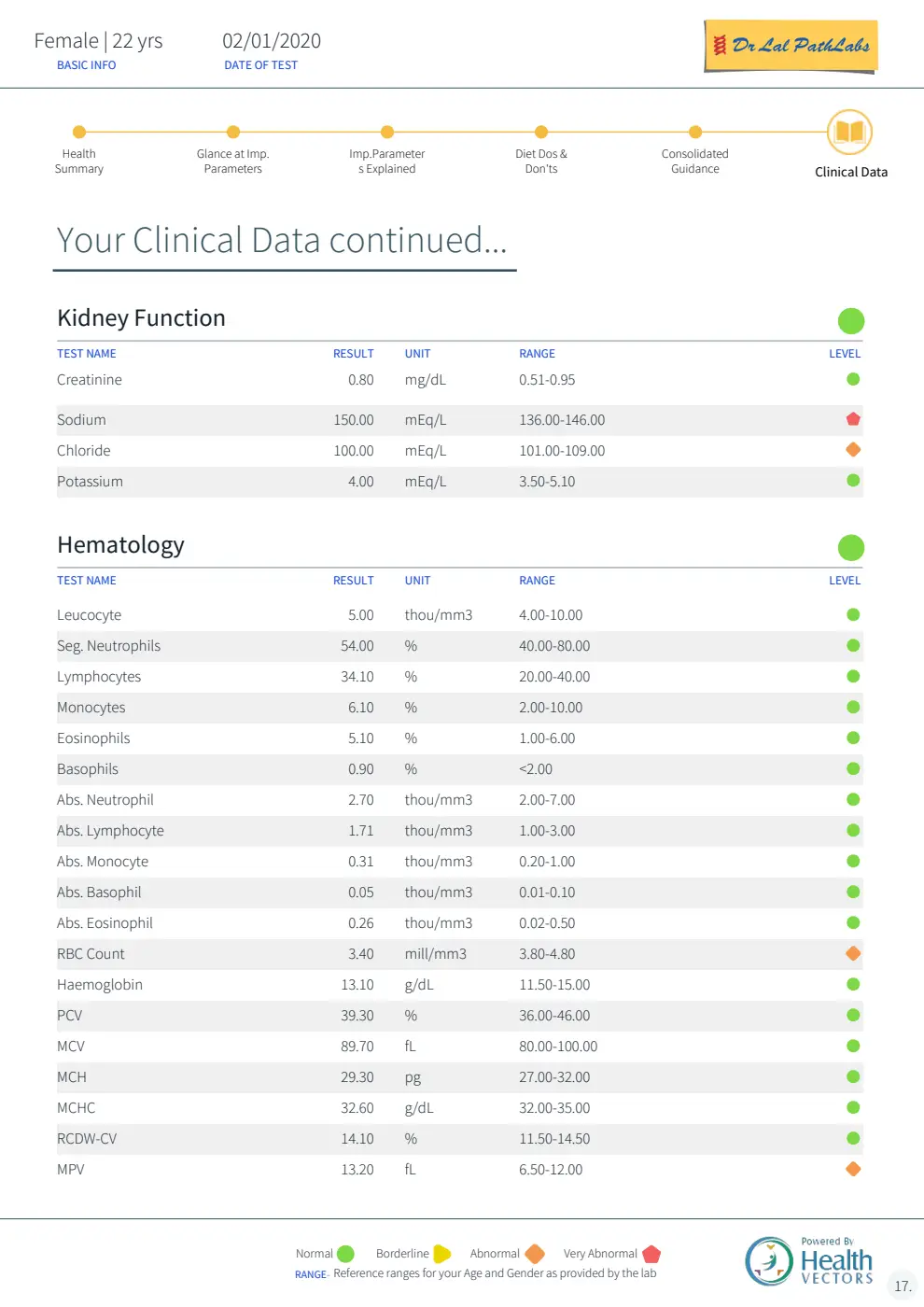
In range, out of range, and by how much
Every result sits on a bar with the lab's low, normal and high zones, and says in words where it falls. When a value is outside, FamFirst shows how far: 0.5 above a limit is a very different thing from 50 above it.
Research on how people read lab results found that this context helps them tell a small deviation from a big one, and it makes the conversation with your doctor easier.
Read: how to read a blood test reportOne place for the whole family's reports
Make a profile for each person you look after, and file every report under the right name. Checking your mother's report from another city works just as well on your phone.
- Trends over time. Switch on Keep history for someone and each new report adds a point to their charts.
- You decide what's kept. Without Keep history, reports are deleted after 30 days.
- Ready for the doctor. Download the results as a spreadsheet or JSON to share.
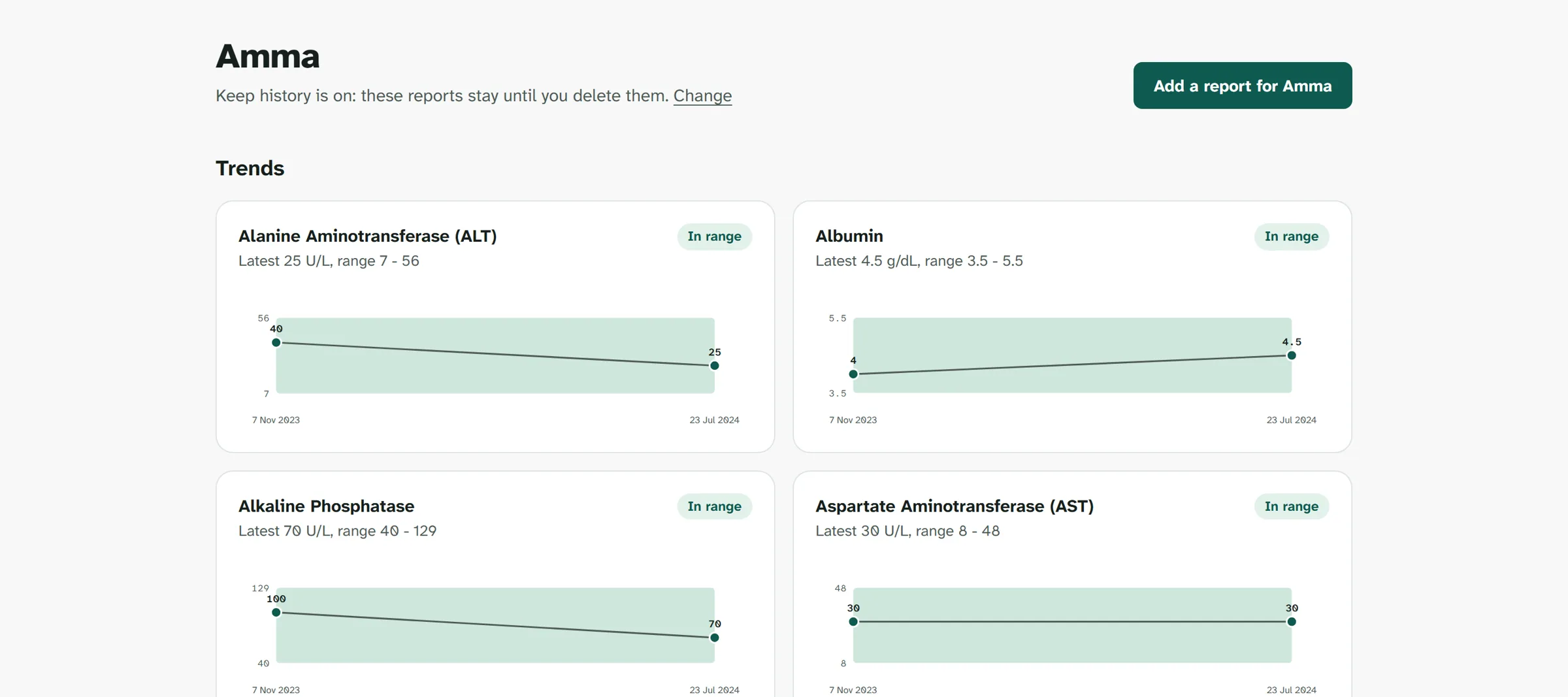
A sample profile built from two of the sample reports.
Built to forget
Lab reports are some of the most personal documents you have. FamFirst keeps as little as it can.
- Your file is deleted after reading
- The PDF or photo is read and deleted straight away, even if reading fails.
- You choose what's kept
- Results last 30 days, or until you delete them if you switch on Keep history.
- Delete anything, any time
- A report, a family member, or your whole account, whenever you want.
- Your details never leave the server
- Only a bare test name like “S. Creat” may be sent to an AI service to match it to a standard name.
- No tracking
- Only the cookies needed to keep you signed in. No analytics, no ads.
- Built for Indian privacy law
- Consent, deletion and an audit trail, designed for the DPDP Act.
The details are in our privacy policy and cookie policy.
Why we built FamFirst
FamFirst started as a side project with one simple aim: to help people make sense of their own lab reports.
A report is one of the most important documents about your health, and most of us can't read it. You shouldn't need a medical degree to know which numbers are worth asking your doctor about, or to keep track of a parent's results from another city.
So we built the tool we wanted: one that reads the report faithfully, shows its working, and forgets what it doesn't need. It's free while it grows. We hope it grows into something much bigger, and you can help: tell us what reads wrong, what's missing, or what would make it more useful, at hello@gendev.studio.
The FamFirst team at GenDev Studio
Typing lab values into a system by hand?
Insurers, wellness programs, clinics and health apps can use FamFirst to turn incoming reports into structured data, with a review screen for anything that needs a second look.
- Measured on your own reports before you commit
- Every value traced to its line, so reviews take seconds
- CSV and JSON today, an API during the pilot
- Files never kept, consent and deletion built for the DPDP Act
Questions and answers
Is FamFirst free?
Yes. You can check up to 3 reports a day for free, and try the sample reports without signing up. Sign in with Google to check your own.
Which reports does it read?
Full body checkups and individual blood and urine test reports from Indian labs and hospitals: PDFs straight from the lab, scanned PDFs, and clear phone photos of printed reports, up to 10 MB and 30 pages.
Do you keep my report?
Not the file: it's deleted as soon as it's read. The results are kept for 30 days, or until you delete them if you switch on Keep history for that person. You can delete anything at any time.
Is this medical advice?
No. FamFirst shows what's printed on your report, in a form that's easier to read. It doesn't diagnose or recommend treatment. Talk to your doctor about your results.
How accurate is it?
Values are copied from the report, never generated, and every value links to the line it came from so you can check it in a second. Blurry photos or unusual layouts can be misread, so always check important values against the original.
Can I keep my parents' reports too?
Yes. Create a profile for each family member, file each report under the right person, and switch on Keep history to see how their results change over time.
From the blog
How to Read Your Blood Test Report: A Guide for India
Understand every line of your lab report: what the reference range means, H and L flags, Indian units like lakhs/cumm, SGPT vs ALT, and what to ask your doctor.
16 Nov 2026, 8 min read
Your next report, explained in seconds
Free, private, and you can try it without signing up.